The Fabrics
Textile Techniques
Thread. Resist. Hand.
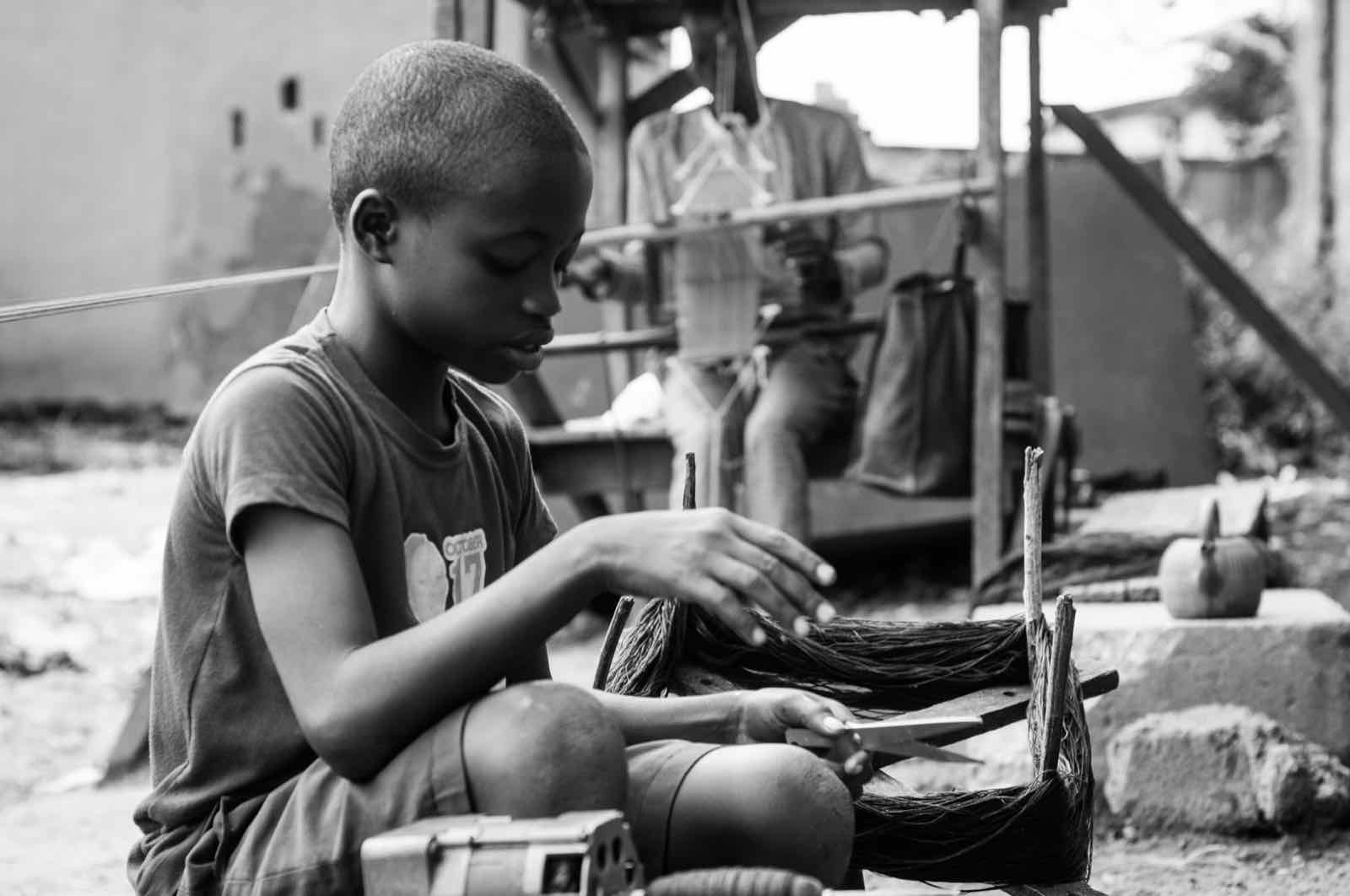
Behind every named cloth is a set of quieter techniques — ways of moving thread, wax and dye that are shared, adapted and reinvented across traditions.
This is the vocabulary Rini studies before it designs.
The Techniques
Weaving across West Africa has long been dominated by narrow-strip looms, on which artisans weave long, slender bands of cloth that are later sewn together into full widths. The form and meaning of the resulting textiles vary widely by region and people — Yoruba aso-oke and Akan kente, for instance, are distinct traditions with their own histories, patterns and social significance, even where the underlying loom technology rhymes.
Dyeing traditions are equally varied. Indigo — derived from local plants and developed through fermentation — recurs across many West African textile cultures, from Yoruba adire to Hausa-dyed cloth in the north, precisely because the same dye plant family is native across much of the region. Its wide use is a shared inheritance, not a single group's invention.
Shared Roots, Distinct Traditions
Resist techniques — using starch, wax, raffia or stitching to keep dye from parts of a cloth — appear independently in different textile cultures worldwide, each with its own materials and logic. What varies is the resist medium: cassava starch in Yoruba adire eleko, molten wax in Javanese-rooted batik, tightly bound raffia in adire oniko.
Finishing — beating, glazing, starching, calendering — is often the least visible but most labour-intensive stage. The high sheen of bazin, for example, comes almost entirely from hand-finishing rather than the base weave.
Reading a Cloth
These techniques rarely stay confined to a single fabric or people. Indigo dyeing connects Yoruba, Hausa, Mande and other West African textile cultures without erasing what makes each tradition distinct. Wax-resist methods link a Javanese origin to a thoroughly West African print culture. Narrow-strip weaving links traditions across the region while remaining locally specific in pattern and meaning.
Reading a cloth well means reading its technique — because technique, as much as motif, is where a textile's history lives.
The Rini Perspective
Rini treats technique as the true subject of study, ahead of any single finished fabric. Before working with a cloth, we try to understand the hands and history behind how it is made — and to be precise about which techniques belong to which traditions.
This page exists so that Bazin, Adire and Batik are never flattened into one generic idea of 'African textile.' Each has its own materials, its own hands, its own history.
Every fabric is, first, a technique someone learned by hand and chose to pass on.