The Fabrics
Bazin
Structure. Sheen. Ceremony.
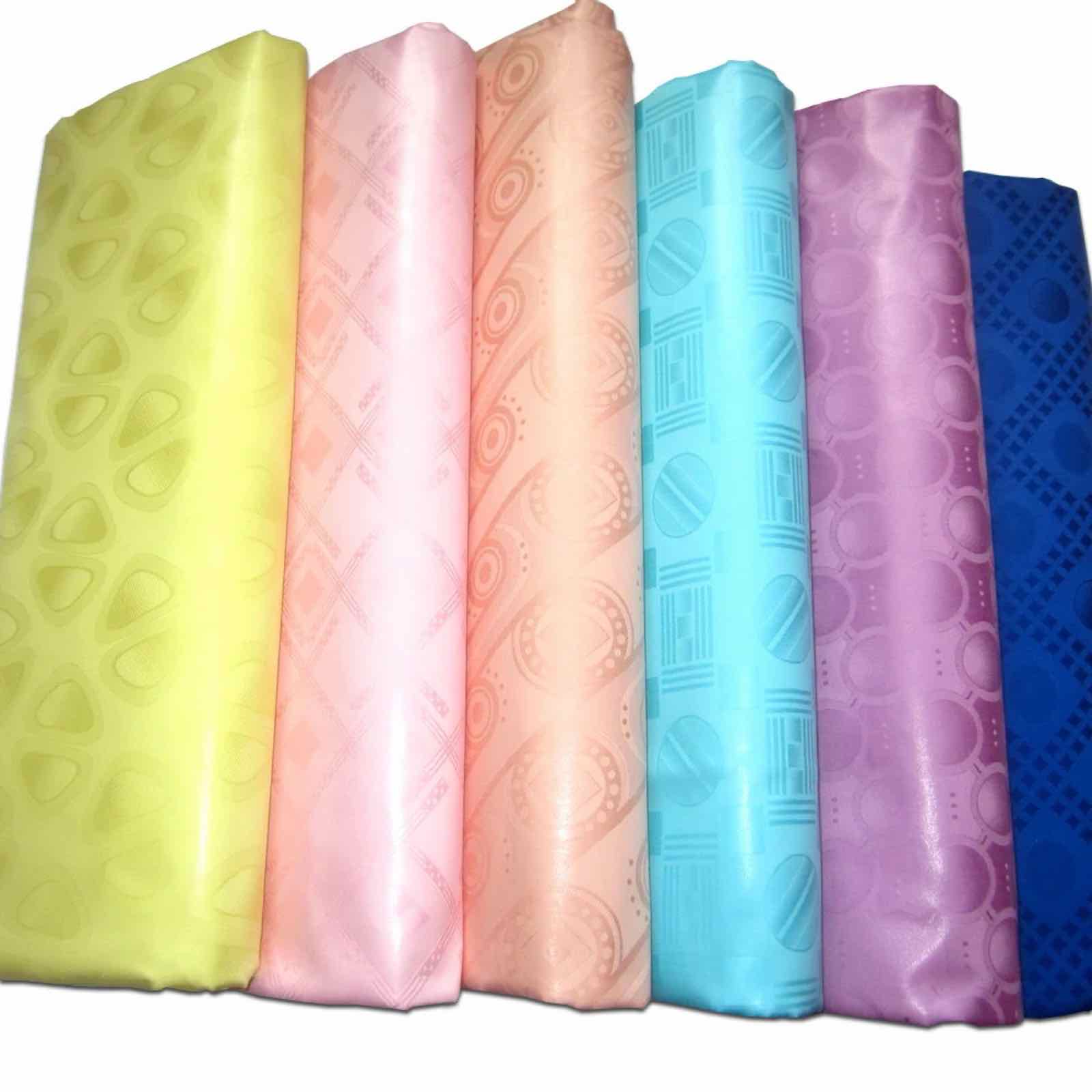
Bazin is recognised before it is touched. A stiffness that holds its own shape. A sheen that shifts as the body moves beneath it.
It is the cloth West Africa reaches for when an occasion matters.
The Fabric
Bazin is a densely woven cotton damask, finished with a distinctive glaze that gives it its characteristic sheen and body. The finest grade, often called bazin riche, is prized for a lustre so pronounced it can appear almost metallic under light.
That sheen is not printed or coated on. It is worked into the cloth by hand — through starching, pounding and polishing — a finishing process as central to the fabric's identity as the weave itself.
A History
The damask base cloth that became bazin has roots in a much older European tradition of glazed cotton and linen damasks, which entered West African markets through long-standing trade networks. Over the twentieth century, it was thoroughly absorbed into West African material culture — imported in growing volume through ports and trading houses, and increasingly finished, dyed and tailored locally.
The finishing techniques that give bazin its signature glaze — hand-beating the starched cloth with wooden mallets or pounders, sometimes for hours, until the surface takes on its glass-like sheen — were developed and refined by West African dyers and finishers. It is this local craftsmanship, more than the origin of the base cloth, that defines bazin as it is known and worn today.
Because the exact chronology of bazin's spread across different West African trading centres is not uniformly documented, we describe this history in broad terms rather than claiming precise dates or a single point of origin.
In Culture
Bazin's weight and sheen made it a natural choice for occasions that call for presence — weddings, naming ceremonies, religious festivals, chieftaincy and title events. In many West African wardrobes it is cut into grand boubous and agbada, wide-sleeved gowns whose volume lets the fabric's structure and shine speak for themselves.
The cost and labour involved in achieving a fine glaze has long made bazin a marker of care and occasion rather than everyday wear. Its brightest, deepest colours — indigo, burgundy, emerald, white — are closely associated with celebration across Nigeria, Mali, Senegal and beyond.
The Rini Perspective
Rini works with bazin as sculpture as much as cloth — studying how a beaten, glazed surface catches and releases light, and how that structure can be reimagined outside the silhouettes it has traditionally been cut into.
We are interested in the labour behind the shine: the hours of hand-finishing that a fast, industrial textile world rarely sees. Bazin, to us, is a study in patience made visible.
Bazin does not whisper. It is worn to be seen, and finished by hand to deserve it.