The Fabrics
Adire
Indigo. Resistance. Expression.
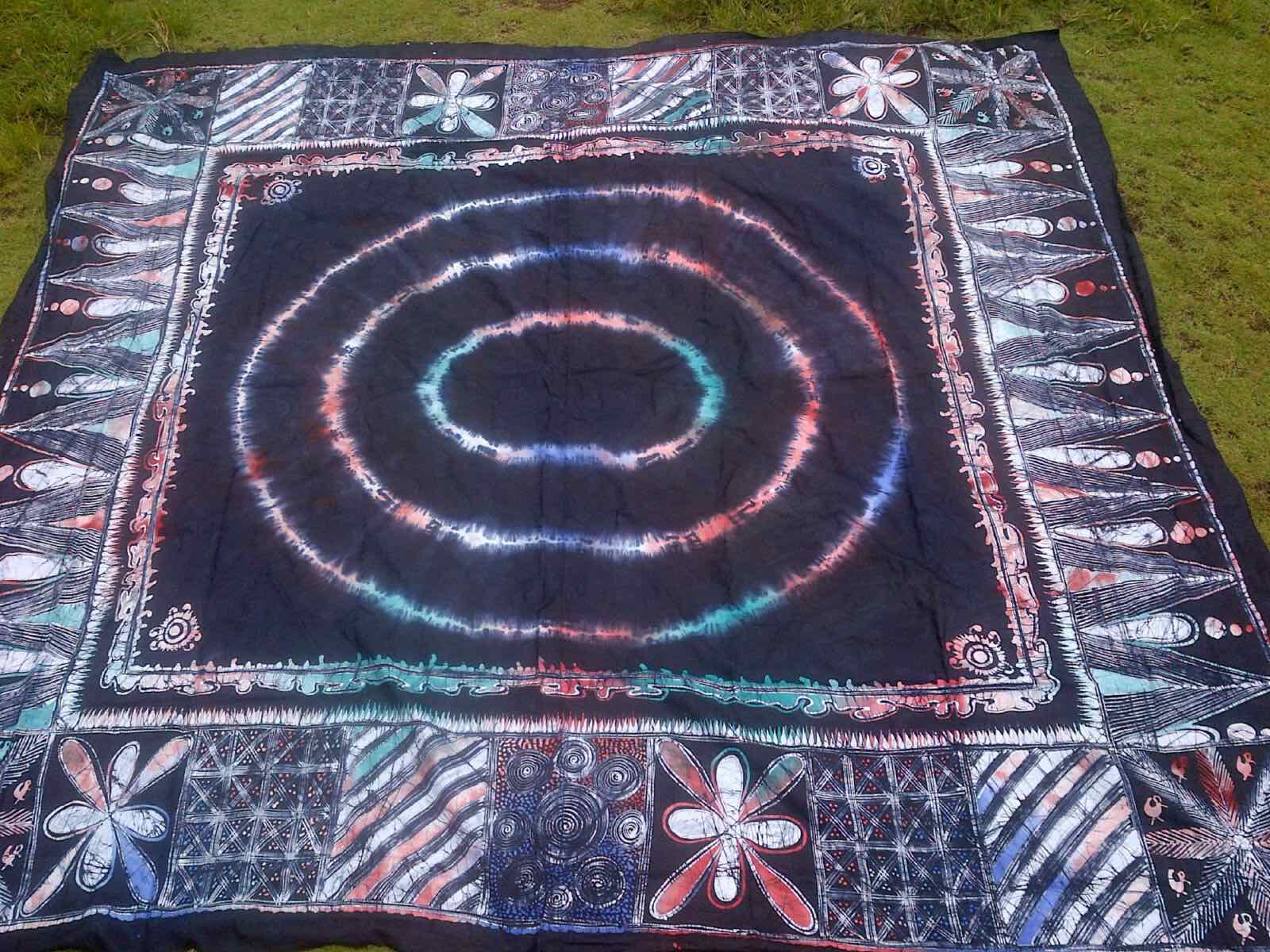
Adire means, simply, 'tied and dyed.' Beneath that simplicity is one of West Africa's most inventive textile arts.
Every pattern begins as a resist — something drawn, tied or stitched to keep the indigo out.
The Fabric
Adire is a resist-dyed cloth, traditionally cotton, associated with the Yoruba people of southwestern Nigeria and most closely identified with Abeokuta, a centre of its production and trade. Its patterns are formed not by adding colour, but by blocking it — through starch painted or stencilled onto the cloth (adire eleko), raffia bound tightly around gathered sections (adire oniko), or hand-stitched resists (adire alabere) — before the cloth is dyed.
Where the resist holds, the indigo cannot reach the fibre. When it is removed, the pattern appears in negative — pale motifs against a deep blue ground.
A History
The deep blue at the heart of adire comes traditionally from indigo dye derived from local plants, historically fermented in dye vats or pots over days to develop its colour. Resist-dyeing itself has old and layered roots across the region, but adire as a distinct, named commercial art form is generally understood to have flourished from the early twentieth century onward, as Abeokuta's women dyers and traders built it into a major craft economy.
Because much of this history was passed down through practice and oral tradition rather than written record, historians describe adire's development in general terms — as an evolving craft shaped by generations of Yoruba women — rather than assigning it a single inventor or founding date.
In Culture
Adire production and trade were, and largely remain, dominated by women — as designers, dyers, and merchants — making the cloth an important thread in Yoruba women's economic history as well as its visual culture. Patterns often carry names, drawn from proverbs, everyday objects, nature, or significant events, so that a length of adire can be read as much as worn.
Cut and worn as wrapper cloth, it moves easily between the everyday and the ceremonial, and remains a living craft — still hand-produced by dyers today, alongside newer, faster reproductions.
The Rini Perspective
Rini approaches adire with particular care, because its history belongs specifically to Yoruba women artisans. We see our role as students and champions of that tradition — working with hand-dyed cloth and honest attribution, not generic 'tribal' imitation.
What draws us to adire is its logic: pattern as an act of resistance, meaning built by what is withheld from the dye as much as by what receives it.
Adire is patience with a plan. Every pale mark is a decision made before the dye ever touched the cloth.