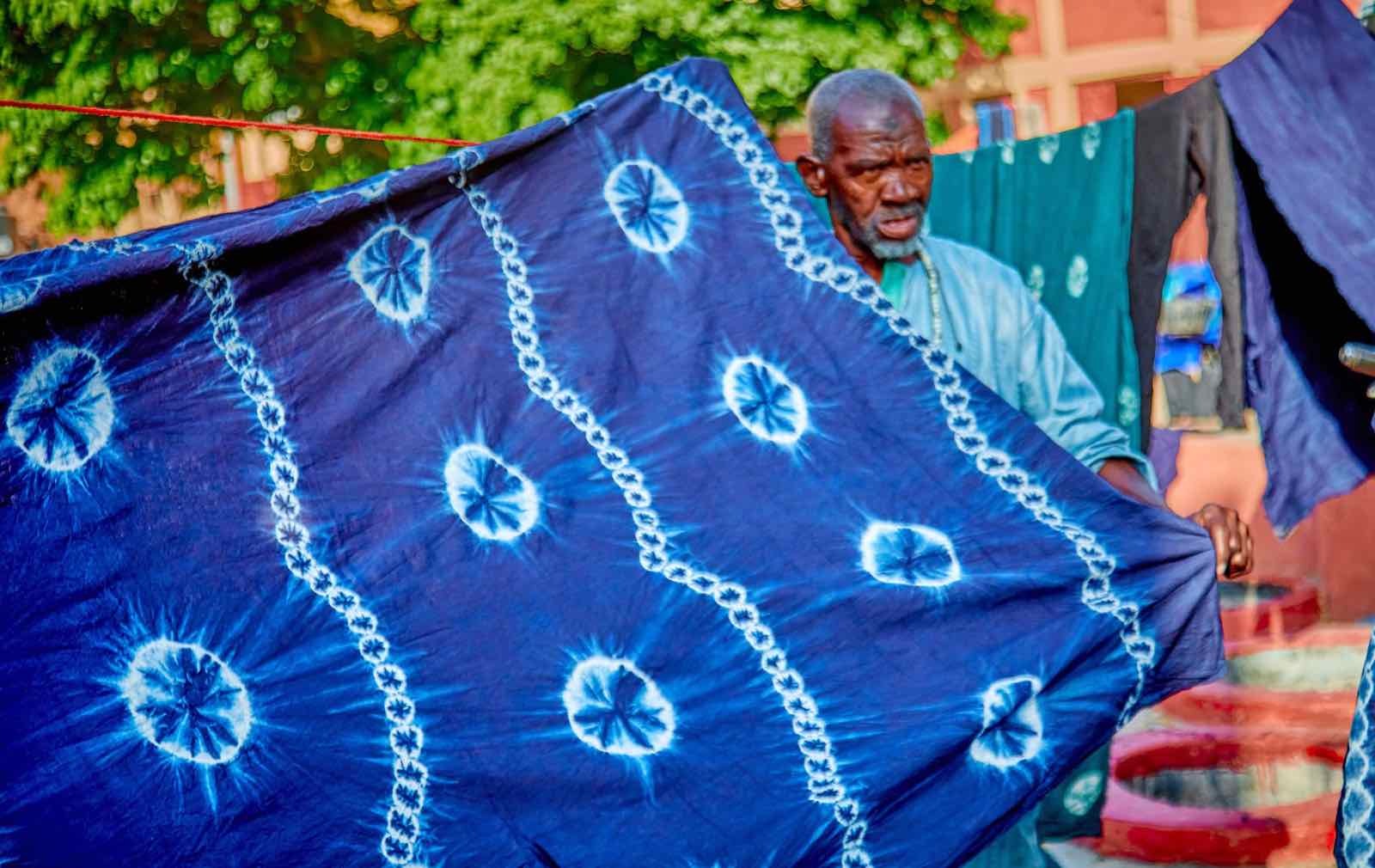
Kano is one of the oldest continuously inhabited cities in West Africa, built in large part around trade — a walled city that for centuries sat at the meeting point of trans-Saharan caravan routes and regional markets.
Its dye pits, historically associated with the Kofar Mata area of the old city, are widely described as centuries old, among the oldest still in active use anywhere in the world. Precise founding dates are debated rather than settled — much of this history lives in craft and oral tradition rather than written record — but the practice itself is not in doubt: cloth still dipped, lifted, oxidised and dipped again, by dyers carrying on a family and guild craft.
Around that dyeing tradition grew guilds of tailors and embroiderers, turning plain indigo cloth into gowns of real scale and detail — garments built for status, ceremony and identity as much as for covering the body.
To visit Kano’s dye pits, even in description, is to see a rare thing: a centuries-old craft economy still functioning, not preserved behind glass.