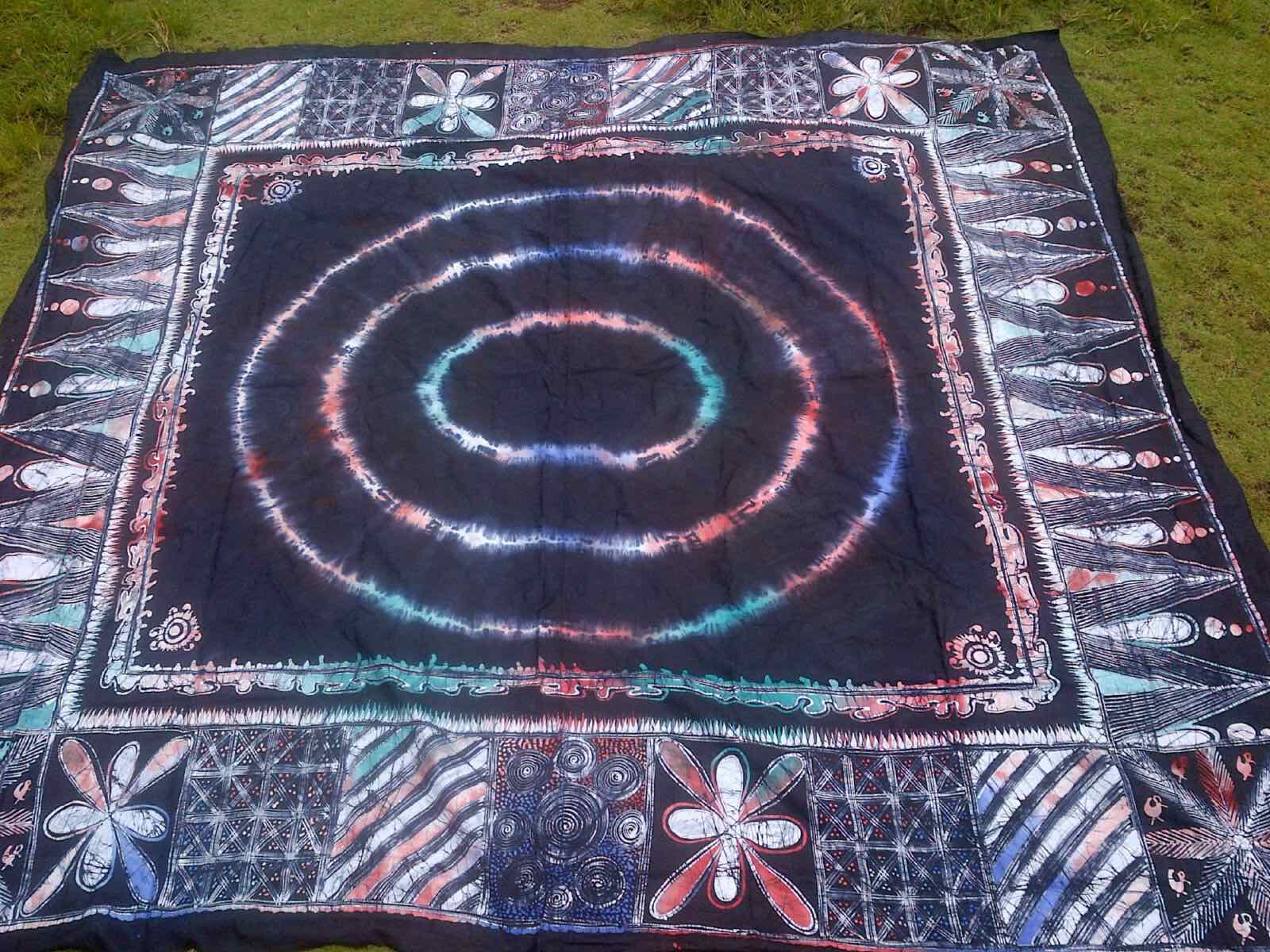
Adire means, plainly, “tied and dyed.” The name undersells what it describes.
Built around Abeokuta and carried largely by generations of Yoruba women — as artisans, designers and traders — adire turns resist into pattern: cassava starch painted or stencilled onto cloth, raffia bound tightly around gathered sections, or fine hand-stitching, each holding indigo dye back from exactly where the maker intends.
What is left, once the resist is removed, is a pattern in negative — pale motifs surfacing from a deep blue ground. Many of these patterns carry names, drawn from proverbs, daily life, or memorable events, so that a length of cloth can be read almost like a sentence.
It is worth being precise about what adire is and isn’t. It belongs to a specific lineage — Yoruba, and historically centred on Abeokuta — distinct from other West African indigo traditions that happen to share the same blue. We try to hold that distinction clearly, rather than letting one indigo cloth stand in for all of them.