The Archive
Kano
A City Built, in Part, on Cloth
Kano is one of the oldest continuously inhabited cities in West Africa, and for centuries a meeting point of caravan routes, markets and craft.
Its relationship to cloth is old, layered, and still visible today.
Trade Routes and a Walled City
For centuries, Kano sat along trans-Saharan caravan routes that carried goods — textiles, leather, salt, dyes and more — between North Africa and the trading cities of the Sahel and beyond. Its historic walled city and markets grew, in significant part, around this role as an exchange point.
That position shaped Kano into both a market for finished cloth arriving from elsewhere and a producer of cloth and dye in its own right — a dual identity that runs through much of its textile history.
The Dye Pits of Kofar Mata
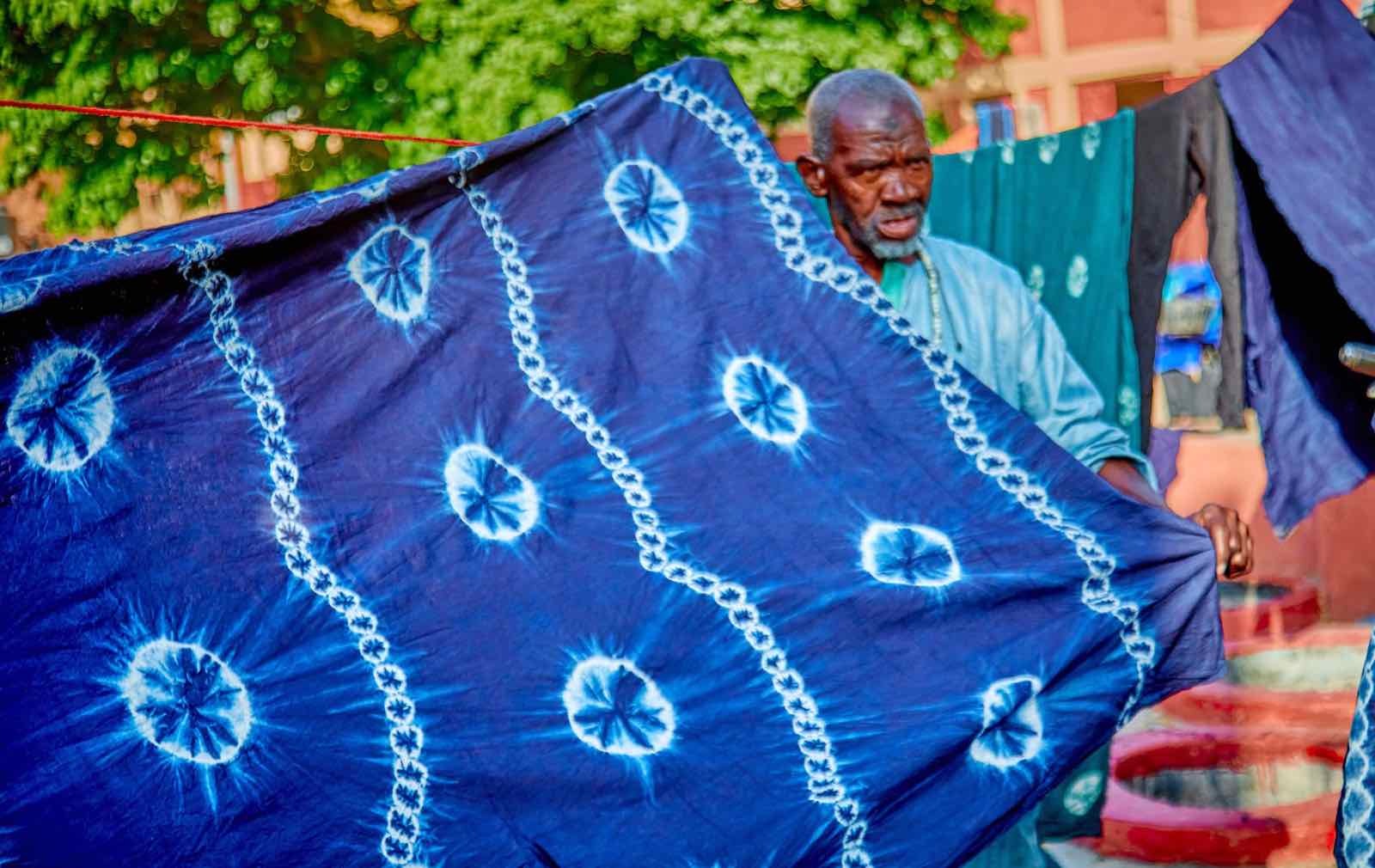
Among Kano's most enduring craft sites are its indigo dye pits, historically associated with the Kofar Mata area of the old city. Some of these pits are widely described as centuries old, among the oldest dye pits still in active use anywhere in the world — though, as with much oral and craft history, precise founding dates are debated rather than settled fact.
Dyers here work in a tradition passed through families and guilds: cloth dipped repeatedly into fermented indigo, lifted to oxidise, and dipped again, until the desired depth of blue is reached.
Craft Guilds and Everyday Life
Dyeing, weaving, embroidery and leatherwork in Kano have historically been organised through guild-like structures, with knowledge and technique passed from master craftspeople to apprentices — a model of craft transmission found in various forms across many West African textile traditions.
This craft economy sits alongside Kano's role as a major commercial centre in Northern Nigeria today, where markets continue to trade cloth from across the region and beyond.
Kano's dye pits are still worked today — a rare, living link to a much older trade in colour.