The Archive
Craft & Process
What the Hand Remembers
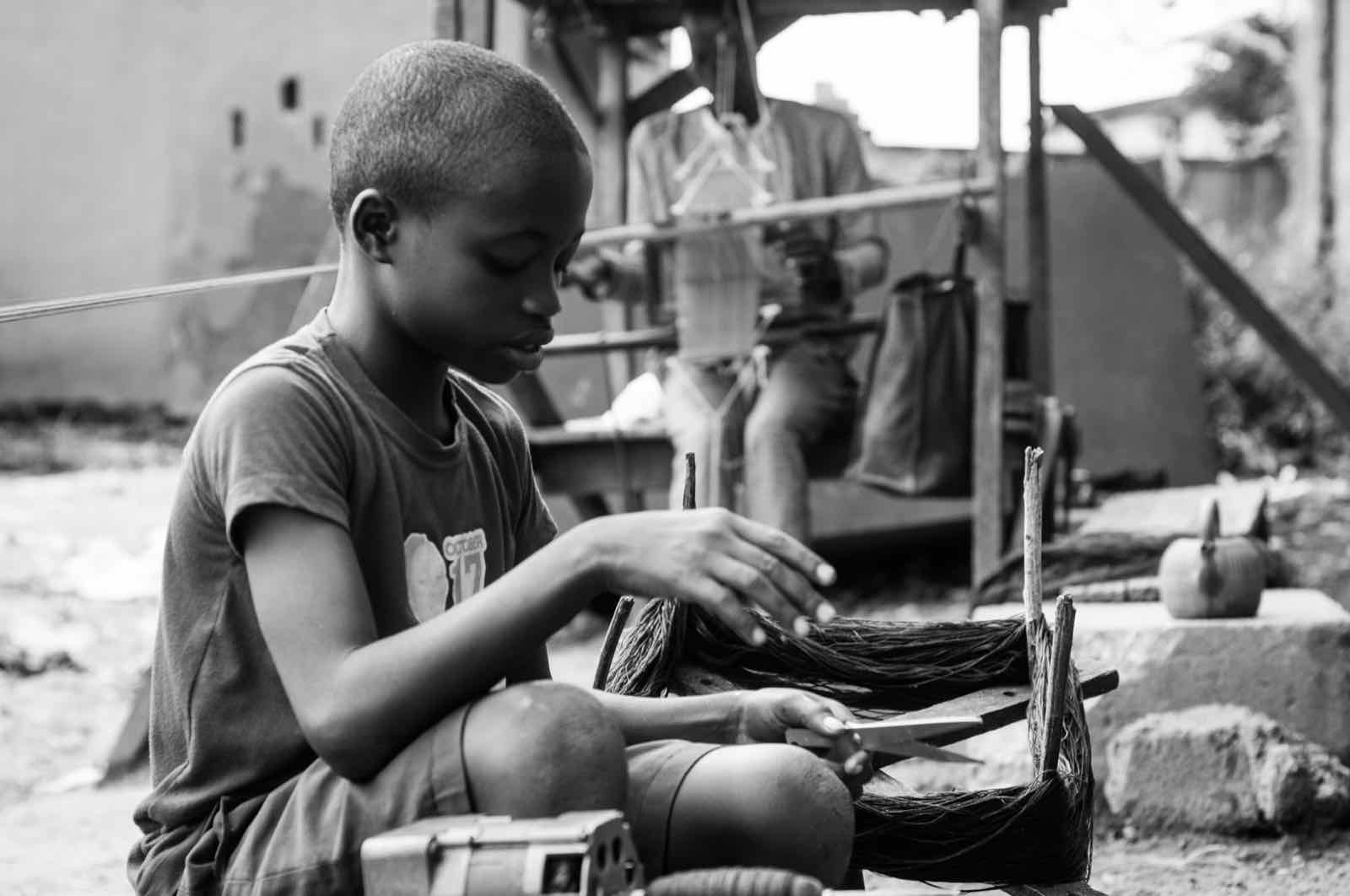
Long before a fabric has a name, it has a process — hours of hand labour that rarely make it onto a label.
This page is a close look at that process, in general terms, across the traditions Rini draws from.
Spinning and Weaving
Handwoven cloth across West Africa is frequently produced on narrow-strip looms, which weave long, slim bands of fabric later joined into full-width cloth. Weaving on these looms is exacting, rhythmic work, often practised by specialist weavers within a particular community or lineage.
Dyeing
Dyeing by hand — whether indigo fermented in a pit, or wax and starch resists applied before dyeing — is slow, physical and highly skilled. Colour is built gradually, through repetition, rather than achieved in a single step.
Finishing
Finishing techniques such as beating, glazing and starching transform a plain woven or dyed cloth into something with real presence — the sheen of bazin, the crispness of a well-set adire, the depth of a fully oxidised indigo. This stage is often the most physically demanding, and the least visible to anyone who only sees the finished garment.
Imperfection, Kept
Hand craft carries small variations — in tension, in colour depth, in the fall of a resist line — that no two lengths of cloth repeat exactly. Rini treats these variations as part of a fabric's character, not a flaw to be corrected.
Every fold, stitch and dye mark is a decision someone made with their hands.